Episode 55 – Gretchen Alper, Business Director for North America, AT – Automation Technology GmbH

Laser triangulation is a great 3D scanning technique for high-speed applications. But what happens when the CMOS chip in your 3D sensor can’t keep pace? In this episode of the Manufacturing Matters podcast, Gretchen Alper of Automation Technology (AT) GmbH joins TECH B2B Marketing’s Jimmy Carroll and Amanda Del Buono to discuss how this challenge led to the development of a CMOS chip with on-sensor intelligence. The technology now enables processing rates as fast as 30 gigapixels per second and is changing the game for applications from logistics to road inspection. Alper also discusses her journey as a woman navigating the automation and manufacturing space, starting from her early career as an applications engineer to her current role as AT’s Business Director for North America.
Specim

Episode 55 – Gretchen Alper, Business Director for North America, AT – Automation Technology GmbH PG.mp3: Audio automatically transcribed by Sonix

Episode 55 – Gretchen Alper, Business Director for North America, AT – Automation Technology GmbH PG.mp3: this mp3 audio file was automatically transcribed by Sonix with the best speech-to-text algorithms. This transcript may contain errors.

Jimmy Carroll: Hi everybody. My name is Jimmy Carroll. I’m the vice president of operations at Tech B2B Marketing, and we are here today on the Manufacturing Matters podcast. I have the distinct pleasure of being joined by Gretchen Alper, who is the business director for North America at AT. Gretchen and of course my colleague Amanda Del Buono. Amanda, I’m not going to go without mentioning you. Gretchen, for those who don’t know, could you tell us a little bit about AT and what you do there?

Gretchen Alper: Sure. Thanks for having me. So AT is a manufacturer of machine vision components. We’re specialized in fast and high-resolution 3D sensors using laser triangulation as the principle. We also make smart infrared cameras, and these are typically designed for OEMs and system integrators. But they serve a wide range of industrial sectors like automotive, electronics, logistics, transportation, and food. Our headquarters and manufacturing facilities are in the north of Germany, north of Hamburg, and AT has been in business for over 25 years. In early 2023, we started our U.S. location just north of Boston when I was hired as the business director. So this was the first subsidiary of its type for AT, and we chose U.S. strategically. Saw a lot of growth and potential in the market. And we’ve had the office open for a year now, and we have now a team of four already and have had great luck finding new customers and meeting people and expanding our opportunities.

Jimmy Carroll: That’s great. Well you chose a great place in Massachusetts. I’m biased. I’m lifetime North Shore of Massachusetts. Glad to hear that you’re here too. So what are you most excited about right now? Both you and the company overall? I mean, there’s a lot to be excited about in automation, both in 3D and infrared. But what are you guys most excited about?

Gretchen Alper: I mean, we’re excited about some new products we’re launching this year. We have one that’s specialized for food processing and logistics, and then we have another one optimized for the needs in electronics manufacturing. And so that’s great. But we’re also really excited about the way we’re developing creative ways to interact with our customers. So we completely redid our website at the end of last year, and we’ve added a ton more application information, and we’ve added a web shop for even online buying, which is brand new for us. Not kind of typical always in the B2B business, but we just wanted to make it really easy if that’s what people wanted to choose to do. And then we’re adopting a lot of AI. This helps us create how-to videos, and they can be in any language, and it’s seamless the way the dubbing works. And we’ve tested the translations. They’re great. So using that to really help our customers use our products, using an AI chatbot to help people find what they need in our documentation. So those are kind of our big things that we’re excited about.

Jimmy Carroll: As long as you’re not having the AI write your content.

Gretchen Alper: So far, no, not generating the content, no.

Amanda Del Buono: I’m kind of curious, what about you yourself? You know, you have an extensive history in the machine vision space and a degree in engineering. I’m curious what brought you here and what are you excited for yourself.

Gretchen Alper: So I started my career as an applications engineer in the semiconductor industry, and I worked for one of my last jobs as an engineer was working for a metrology equipment provider. And with this I realized I was much more interested in how the measurement technology worked and the components behind the technique rather than applying the technique. I also quickly figured out that the solitary lab and fab life was not going to be a fit for my personality. It was kind of solitary, and I really like to connect with people. I happened to find then a small Dutch 2D industrial camera manufacturer that was Adimec, soon to be part of Teledyne FLIR, and I got started there doing sales, marketing, and application support. And it was just always interesting. So many different applications. I worked there for 18 years. When AT approached me to start the U.S. location, it was kind of a perfect opportunity, perfect time. I could keep the things I loved. I loved working for a European company. Love working with machine vision components in the high-performance, high-quality space, but it was exciting to look at new applications and new industries I had never worked in, like wood manufacturing or food and all those things. So it was kind of cool to learn all that. So that’s really why I like this space. Just the number of applications is so broad that it’s something new all the time to learn.

Amanda Del Buono: Yeah, yeah.

Jimmy Carroll: You know, Adimec is where I knew you in a past life when I was at Vision Systems Design magazine. But now you’re kind of in the 3D world, right? So one of the things I wanted to ask you about. There’s a lot to talk about with 3D, obviously, but something I found personally interesting and maybe others will too is you actually developed your own image sensor, right? A warp sensor? And then you’re referring to it as as the world’s fastest 3D sensor?

Gretchen Alper: Yes.

Jimmy Carroll: I say “referring to it” because I don’t want to make the claim. I will let you, but I’m curious: what led to that development? Well, I guess I’ll stop there. What led to the development of that sensor?

Gretchen Alper: So laser triangulation as a 3D technique is really ideal for high-speed applications, and we realized that the speed of 3D sensors were going to hit a limit just with what levers you can pull on a CMOS chip. You can either add more output channels, increase the clock speed. But those were going to hit a max data rate, processing rate of about 2 to 3 giga pixels per second. We knew to go faster you need some sort of on-sensor intelligence, and these just weren’t available off the shelf. So we designed our own CMOS image sensor with on-chip processing. So it only outputs the relevant data, so only the pixels containing the laser line information. This gets you an increase in the processing rate, 20 to 30 giga pixels per second. So really a 10 times increase by making this change, really reducing the data off the sensors, the huge huge benefit.

Jimmy Carroll: So that’s interesting. I’m not totally sure how new this is, but do you have any customers already using it? Or if not, what applications did you have in mind when this was developed?

Gretchen Alper: Yeah, it’s really interesting. There are two very different applications that are first early adopters. So I think one that makes sense is electronics inspection because of course that’s always high data rate. Throughput is always the focus. So that one makes sense, and they’ve adopted it. But the other one is actually road inspection. Pavement inspection. By having this super-fast data rate, the measurement vehicles can go faster. They can actually go the speed limit they need to be on the highway, more like 60 mph, and get all the data they need. So that was one that was really interesting as an important, leading application.

Jimmy Carroll: What about any use in the warehouse? And I’m curious, I ask about that because not long ago, market intelligence firm Interact Analysis predicted modest warehouse automation growth for this year but then double-digit growth in the years to come, and I’m just curious, even if you’re not seeing your product there, with your knowledge of the machine vision space, what do you think are some of the main growth drivers in warehouse automation? I mean, obviously 3D plays a big part there.

Gretchen Alper: Yeah. We have seen new customers in the logistics sector. I think it kind of comes from the convergence of the labor shortage and increased costs and labor, and the 3D technology now meeting the application needs. So it’s kind of the two things are now converging, and what we found in the logistics market is the need for a really flexible and versatile 3D sensor to deal with the variety and packaging sizes. So the sensors need to have a big enough field of view but also the speed and accuracy to quickly capture small defects. So it’s kind of a complex measurement setup that’s required. And so we have a modular hardware design. So our laser module and our sensor modules are designed separately, and there’s a customizable link that just can be set at any length to separate them. So it can handle field of views from 70 to 1600 millimeters without any customization or long lead time. And so we’re seeing people come to us for that where they need just something that can handle all different packaging sizes, for instance.

Jimmy Carroll: Yeah, exactly. That’s exactly one of the things I was thinking about in terms of 3D in the warehouse, and versatility.

Amanda Del Buono: I thought it was interesting when I was looking at some of the different applications for 3D. You had identified food and beverage as one, and we work with a couple of food and beverage automation suppliers. And it’s kind of a touchy area in that industry. I’m sure it depends on if you’re a baker or if you’re in meat, but I’m curious what has been food and beverage manufacturers’ response to these advanced sensing solutions? What needs are they trying to fill? And how are you seeing them used?

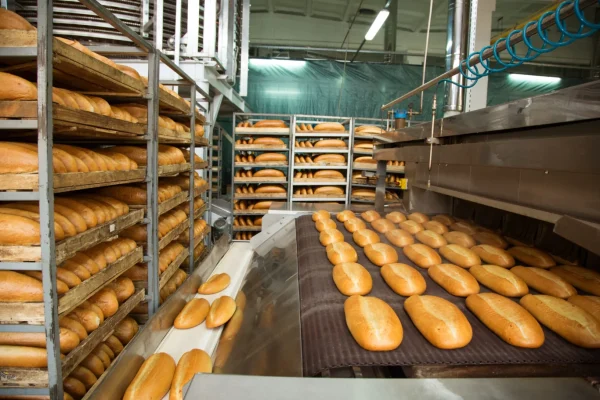
Gretchen Alper: It seems like the food and beverage industry has increased pressures on costs in these past years, and we’ve seen also there’s this increased demand from consumers who want improved quality, consistency. Sustainability has become a big area of focus. That’s one for a project we have that’s food branding. So there’s a trend towards putting the brand right on the fruit, for instance, the barcode, right on to eliminate packaging, but they need to do laser engraving without damaging the fruit. They have to ensure that the skin’s not damaged in the process. So that’s kind of one area. So it really meets that sustainability requirement but really needs to be done by an automation technique. So that’s been great, and we’re just noticing that a lot more food and beverage manufacturers are trying to use 3D sensing for process improvement, again to improve their costs. And using for monitoring. The bakery check system that we have is really about consistency and just kind of meeting that consumer demand. Also now there’s more products more easily available. We developed new ECS sensors that are cost- and performance-optimized for food and beverage, trying to make it easier to use, more cost-effective. It’s not optimized for micron measurements. It’s optimized for position, quick check, that kind of setup.
Amanda Del Buono: Yeah, we’ve definitely seen consistency and cost savings being a driver for automation in food and beverage for sure.

Jimmy Carroll: Gretchen, I mentioned this before, but looking at 3D in general, there’s so much to talk about. I’ve been in the machine vision space now for ten-plus years, and it’s kind of been a lot of the same themes. It’s becoming more accessible. Your people are lowering the barrier of adoption, making it easier to use, less expensive, things like that. Smaller in some cases too. Are there any notable trends that you’ve seen in 3D as of late, like maybe you mentioned a few already, but in particular industries where your technology is being used more often, and I guess as a part 2 of that question, same for infrared. I’m curious if there’s any interesting ways that people are using infrared in the industrial space.

Gretchen Alper: So for new 3D applications, I think that probably previously 3D was much more used for really challenging measurements. And like I talked about, doing these kind of micron-level measurements and that kind of detection. But now 3D is also used for position checking with robots. And so that just requires a slightly different optimization in the hardware, which we’ve made with our new products. It’s not that it’s a lower-quality product. It’s just optimized in a little different way. As far as other trends, I think with the growth in the electric vehicle market, the electric vehicle battery production is so complex and involves so many different inspection steps — some 2D, some 3D — and that’s just going to continue to get probably more complex and add more inspections and need a lot of process development work. So that’s kind of a big trend I would see for the coming years. And electronics packaging also getting more complex and needing more measurements. And needing more flexible options, increase in speed and resolution, all to meet those.

Jimmy Carroll: And just to tack on to that a little bit. I don’t want to cut you off, but it’s a really good point on EV battery manufacturing. It’s a space where you can see kind of a convergence of some of the so-called hot topics, if you will, or technologies like this, 3D. But there’s a lot of AI and deep learning there too. And it’s one of the areas where we’re actually seeing deep learning adds significant real-life value. Not just like the hype of deep learning, which has been talked about a lot by us and everybody else. But there’s a lot of cool application-specific systems and technologies working together to solve these new problems. And it’s cool to follow from my perspective.

Gretchen Alper: Yeah. So on IR applications, that’s an area that’s really brand new to me. But I think there’s a lot of the standard old school applications of early fire detection and kind of things used in the steel industry. But now we’re seeing, there could be more optical gas leak detection. That’s kind of evolving. And I think that’s one of the new ones I’ve noticed.

Jimmy Carroll: And yours are smart IR cameras. Is that right? That’s a unique angle.

Gretchen Alper: Yeah. So it can all be contained in just one little camera to give you output and answer. Give you an alert if you’ve got a problem or not.

Jimmy Carroll: Yeah. So that’s interesting. There’s probably a lot of other applications out there for that. I guess, on the same lines of trends in the space and it’s an obvious one, but you see it a lot lately, and that’s ease of use. What are some ways that you’ve made your technologies easier to use in a market that is seemingly demanding it?

Gretchen Alper: You know, we’re always making investments to try to make 3D laser triangulation easier to understand and adopt. We have the modular hardware configurations to make for a better system fit. And then we’ve also added some metrology development capabilities to our software package. So trying not to leave our users on their own with what do they then do with this data they get off the sensors. So helping them develop their measurement as well. As I mentioned, using AI to make support videos and make the documentation more searchable, help people find what they’re looking for. To understand people want information from a variety of channels. They don’t want to read a whole manual, and something we’re seeing is that there’s an increasing need for 3D measurements, and more end users are developing their own inspection systems because they have a very unique requirement. And we see this as a further push that we’re going to have to make the products even more easy to integrate and adopt, because of course, those folks doing that are not laser triangulation or vision specialists. They’re just trying to get a job done and need something that just helps them do that.

Jimmy Carroll: Right. Yeah. I mean, there’s this whole idea of . . . well, it’s not an idea. It’s a reality, right, of you need people that work on the plant floor to be able to troubleshoot these systems, and downtime is lost money, and you might not necessarily need somebody who can specify and design that system. But troubleshooting, operating, and maybe even in some cases programming, you’re going to need some people on staff. So yeah, it behooves the industry and vendors in the industry to make these things easier and move along with the industry and grow. In the larger automation space, and this is the last one I’ll kind of ask that’s along this line, but what are some trends or predictions that you see as likely in the next couple of years.

Gretchen Alper: You know, there’s been a lot of recent quality issues in the airline industry and other transportation sectors. I would expect even more strict measurement and monitoring requirements there, whether it be on the vehicle production side or on the road and railway and tunnel safety side, bridge side. And I think continued demands on sustainability and lessening the environmental impact in a variety of industries will become more and more important. Maybe we see some applications where you can use 3D to try to reuse packaging and things like that. That might also evolve from that push.

Jimmy Carroll: Yeah. Yeah, totally. That makes sense.

Amanda Del Buono: Yeah. So before we kind of start closing out here, I have been talking to a lot of women in automation lately. And with your perspective from the machine vision space, I was kind of curious, how do you think the role of women compares to the overall automation industry? And how have you seen this progressing throughout your career? And what is your take on that?

Gretchen Alper: I think probably most of us would say we see an increased number of women in automation for sure, since I’ve been in this space for about 20 years. I mean, it did seem like at the A3 conference this year, for instance, there was quite a few more women than in the past. Still pretty small minority, but it’s growing, so that’s good. I saw on a previous podcast that you guys have mentioned 33% of entry-level positions in industrial manufacturing are women, so that’s great progress. I know it’ll take more time for this to dramatically increase the numbers of women in management and directorial positions, but I’m hopeful, because for most of my career, I’ve been often the only woman in the room during engineering customer visits. Still kind of the case. I will say what was really appealing to me at AT is they had women in management positions. They had women in prominent positions in R&D, which was the first time I’ve been able to work in a company with that and be able to say that. So I see some progress. I’m hopeful. Yeah. And I think we all benefit from gender-balanced environments.

Amanda Del Buono: Absolutely.

Jimmy Carroll: Yeah. There are more women at these events over the years, at least in my experience. But, and Amanda you can attest to this because we actually used to work at the same company. Like in the publishing industry, it was less so. I had many, many female bosses and colleagues, and in the automation space, there’s obviously less women. So there’s still work to do, right? And that’s why I appreciate Amanda talking about it and having people like you join and then folks like, you know, the Automation Ladies and Mavens of Manufacturing and some of the other podcasters out there, but in particular, a shout-out to the A3 for putting it together like that networking event on the first day, to just say, like, hey, this is going to become more important and it’s going to be more of us.

Amanda Del Buono: It’s interesting to see that they’re also expanding that more, you know, and from somebody like you, Gretchen, who’s been around automation for so long. Finally, you know, Automate is going to have a whole panel of women talking this year. So it seems like there may be a stepping stone we’re kind of reaching at this point, where at least women are becoming a part of the bigger conversation in the industry as a whole not just within their organizations.

Gretchen Alper: And I hope maybe next step with A3, it will be more outreach, because I think one of the barriers is just people in general, students in general, not knowing what the opportunities are. I mean, I think robotics has done a great job of making that field appealing, but the rest of automation, there’s still lots of cool and interesting things to do outside of robotics that we could make people aware of.

Amanda Del Buono: Absolutely, absolutely. Education is a good starting point. And getting young girls interested.

Gretchen Alper: Where they’re just thinking about what they want to do. What’s interesting.

Amanda Del Buono: Exactly, exactly. Instead of wanting to be YouTubers or whatever it is that they’re looking at now.

Jimmy Carroll: Yeah. And I think hopefully it’s just a thing that will shift, well, I shouldn’t say over time, but everything requires time. But in the sense that, my experience in publishing was never like, oh, there’s too many men and I don’t work around enough women. My previous jobs have always been, I’ve probably had more female bosses than I had male. But then it was a little eye-opening once I went to my first A3 Business Forum. But in the last, you know, I’ve been going for a decade or so now, maybe a little longer, there’s been a lot of progress. And with these generations, hopefully it will become less of a thing that people even have to think about.

Gretchen Alper: That would be ideal.

Jimmy Carroll: All right, Gretchen. Well, if people want to learn more about AT, what’s the website? Obviously they can find you on LinkedIn, but what’s your website

Gretchen Alper: Our new website is AT-sensors.com.

Jimmy Carroll: All right, well, if anybody has any questions for Gretchen or for us or any comments or would like to join the podcast, you can reach out to us at manufacturing-matters.com. And thanks everyone for watching. And Gretchen, thanks again for joining us.

Gretchen Alper: Yeah, thanks so much for having me.

Amanda Del Buono: Yeah. Thank you.

Jimmy Carroll: Of course.

Sonix is the world’s most advanced automated transcription, translation, and subtitling platform. Fast, accurate, and affordable.

Automatically convert your mp3 files to text (txt file), Microsoft Word (docx file), and SubRip Subtitle (srt file) in minutes.

Sonix has many features that you’d love including generate automated summaries powered by AI, advanced search, collaboration tools, automated subtitles, and easily transcribe your Zoom meetings. Try Sonix for free today.

Jimmy Carroll: [00:00:01] Hi everybody. My name is Jimmy Carroll. I’m the vice president of operations at Tech B2B Marketing, and we are here today on the Manufacturing Matters podcast. I have the distinct pleasure of being joined by Gretchen Alper, who is the business director for North America at AT. Gretchen and of course my colleague Amanda Del Buono. Amanda, I’m not going to go without mentioning you. Gretchen, for those who don’t know, could you tell us a little bit about AT and what you do there?

Gretchen Alper: [00:00:27] Sure. Thanks for having me. So AT is a manufacturer of machine vision components. We’re specialized in fast and high-resolution 3D sensors using laser triangulation as the principle. We also make smart infrared cameras, and these are typically designed for OEMs and system integrators. But they serve a wide range of industrial sectors like automotive, electronics, logistics, transportation, and food. Our headquarters and manufacturing facilities are in the north of Germany, north of Hamburg, and AT has been in business for over 25 years. In early 2023, we started our U.S. location just north of Boston when I was hired as the business director. So this was the first subsidiary of its type for AT, and we chose U.S. strategically. Saw a lot of growth and potential in the market. And we’ve had the office open for a year now, and we have now a team of four already and have had great luck finding new customers and meeting people and expanding our opportunities.

3D sensor C6 series

Jimmy Carroll: [00:01:33] That’s great. Well you chose a great place in Massachusetts. I’m biased. I’m lifetime North Shore of Massachusetts. Glad to hear that you’re here too. So what are you most excited about right now? Both you and the company overall? I mean, there’s a lot to be excited about in automation, both in 3D and infrared. But what are you guys most excited about?

Gretchen Alper: [00:01:55] I mean, we’re excited about some new products we’re launching this year. We have one that’s specialized for food processing and logistics, and then we have another one optimized for the needs in electronics manufacturing. And so that’s great. But we’re also really excited about the way we’re developing creative ways to interact with our customers. So we completely redid our website at the end of last year, and we’ve added a ton more application information, and we’ve added a web shop for even online buying, which is brand new for us. Not kind of typical always in the B2B business, but we just wanted to make it really easy if that’s what people wanted to choose to do. And then we’re adopting a lot of AI. This helps us create how-to videos, and they can be in any language, and it’s seamless the way the dubbing works. And we’ve tested the translations. They’re great. So using that to really help our customers use our products, using an AI chatbot to help people find what they need in our documentation. So those are kind of our big things that we’re excited about.

Jimmy Carroll: [00:03:03] As long as you’re not having the AI write your content.

Gretchen Alper: [00:03:06] So far, no, not generating the content, no.

Amanda Del Buono: [00:03:12] I’m kind of curious, what about you yourself? You know, you have an extensive history in the machine vision space and a degree in engineering. I’m curious what brought you here and what are you excited for yourself.

Gretchen Alper: [00:03:27] So I started my career as an applications engineer in the semiconductor industry, and I worked for one of my last jobs as an engineer was working for a metrology equipment provider. And with this I realized I was much more interested in how the measurement technology worked and the components behind the technique rather than applying the technique. I also quickly figured out that the solitary lab and fab life was not going to be a fit for my personality. It was kind of solitary, and I really like to connect with people. I happened to find then a small Dutch 2D industrial camera manufacturer that was Adimec, soon to be part of Teledyne FLIR, and I got started there doing sales, marketing, and application support. And it was just always interesting. So many different applications. I worked there for 18 years. When AT approached me to start the U.S. location, it was kind of a perfect opportunity, perfect time. I could keep the things I loved. I loved working for a European company. Love working with machine vision components in the high-performance, high-quality space, but it was exciting to look at new applications and new industries I had never worked in, like wood manufacturing or food and all those things. So it was kind of cool to learn all that. So that’s really why I like this space. Just the number of applications is so broad that it’s something new all the time to learn.

Amanda Del Buono: [00:05:01] Yeah, yeah.

Jimmy Carroll: [00:05:03] You know, Adimec is where I knew you in a past life when I was at Vision Systems Design magazine. But now you’re kind of in the 3D world, right? So one of the things I wanted to ask you about. There’s a lot to talk about with 3D, obviously, but something I found personally interesting and maybe others will too is you actually developed your own image sensor, right? A warp sensor? And then you’re referring to it as as the world’s fastest 3D sensor?

Gretchen Alper: [00:05:31] Yes.

Jimmy Carroll: [00:05:32] I say “referring to it” because I don’t want to make the claim. I will let you, but I’m curious: what led to that development? Well, I guess I’ll stop there. What led to the development of that sensor?

Gretchen Alper: [00:05:47] So laser triangulation as a 3D technique is really ideal for high-speed applications, and we realized that the speed of 3D sensors were going to hit a limit just with what levers you can pull on a CMOS chip. You can either add more output channels, increase the clock speed. But those were going to hit a max data rate, processing rate of about 2 to 3 giga pixels per second. We knew to go faster you need some sort of on-sensor intelligence, and these just weren’t available off the shelf. So we designed our own CMOS image sensor with on-chip processing. So it only outputs the relevant data, so only the pixels containing the laser line information. This gets you an increase in the processing rate, 20 to 30 giga pixels per second. So really a 10 times increase by making this change, really reducing the data off the sensors, the huge huge benefit.

Jimmy Carroll: [00:06:47] So that’s interesting. I’m not totally sure how new this is, but do you have any customers already using it? Or if not, what applications did you have in mind when this was developed?

Gretchen Alper: [00:07:01] Yeah, it’s really interesting. There are two very different applications that are first early adopters. So I think one that makes sense is electronics inspection because of course that’s always high data rate. Throughput is always the focus. So that one makes sense, and they’ve adopted it. But the other one is actually road inspection. Pavement inspection. By having this super-fast data rate, the measurement vehicles can go faster. They can actually go the speed limit they need to be on the highway, more like 60 mph, and get all the data they need. So that was one that was really interesting as an important, leading application.

Jimmy Carroll: [00:07:42] What about any use in the warehouse? And I’m curious, I ask about that because not long ago, market intelligence firm Interact Analysis predicted modest warehouse automation growth for this year but then double-digit growth in the years to come, and I’m just curious, even if you’re not seeing your product there, with your knowledge of the machine vision space, what do you think are some of the main growth drivers in warehouse automation? I mean, obviously 3D plays a big part there.

Gretchen Alper: [00:08:14] Yeah. We have seen new customers in the logistics sector. I think it kind of comes from the convergence of the labor shortage and increased costs and labor, and the 3D technology now meeting the application needs. So it’s kind of the two things are now converging, and what we found in the logistics market is the need for a really flexible and versatile 3D sensor to deal with the variety and packaging sizes. So the sensors need to have a big enough field of view but also the speed and accuracy to quickly capture small defects. So it’s kind of a complex measurement setup that’s required. And so we have a modular hardware design. So our laser module and our sensor modules are designed separately, and there’s a customizable link that just can be set at any length to separate them. So it can handle field of views from 70 to 1600 millimeters without any customization or long lead time. And so we’re seeing people come to us for that where they need just something that can handle all different packaging sizes, for instance.

Jimmy Carroll: [00:09:31] Yeah, exactly. That’s exactly one of the things I was thinking about in terms of 3D in the warehouse, and versatility.

Amanda Del Buono: [00:09:37] I thought it was interesting when I was looking at some of the different applications for 3D. You had identified food and beverage as one, and we work with a couple of food and beverage automation suppliers. And it’s kind of a touchy area in that industry. I’m sure it depends on if you’re a baker or if you’re in meat, but I’m curious what has been food and beverage manufacturers’ response to these advanced sensing solutions? What needs are they trying to fill? And how are you seeing them used?

Gretchen Alper: [00:10:15] It seems like the food and beverage industry has increased pressures on costs in these past years, and we’ve seen also there’s this increased demand from consumers who want improved quality, consistency. Sustainability has become a big area of focus. That’s one for a project we have that’s food branding. So there’s a trend towards putting the brand right on the fruit, for instance, the barcode, right on to eliminate packaging, but they need to do laser engraving without damaging the fruit. They have to ensure that the skin’s not damaged in the process. So that’s kind of one area. So it really meets that sustainability requirement but really needs to be done by an automation technique. So that’s been great, and we’re just noticing that a lot more food and beverage manufacturers are trying to use 3D sensing for process improvement, again to improve their costs. And using for monitoring. The bakery check system that we have is really about consistency and just kind of meeting that consumer demand. Also now there’s more products more easily available. We developed new ECS sensors that are cost- and performance-optimized for food and beverage, trying to make it easier to use, more cost-effective. It’s not optimized for micron measurements. It’s optimized for position, quick check, that kind of setup.

C6-2040CS 3D-Profiling sensor monitoring baking production process

Amanda Del Buono: [00:11:50] Yeah, we’ve definitely seen consistency and cost savings being a driver for automation in food and beverage for sure.

Jimmy Carroll: [00:11:59] Gretchen, I mentioned this before, but looking at 3D in general, there’s so much to talk about. I’ve been in the machine vision space now for ten-plus years, and it’s kind of been a lot of the same themes. It’s becoming more accessible. Your people are lowering the barrier of adoption, making it easier to use, less expensive, things like that. Smaller in some cases too. Are there any notable trends that you’ve seen in 3D as of late, like maybe you mentioned a few already, but in particular industries where your technology is being used more often, and I guess as a part 2 of that question, same for infrared. I’m curious if there’s any interesting ways that people are using infrared in the industrial space.

Gretchen Alper: [00:12:46] So for new 3D applications, I think that probably previously 3D was much more used for really challenging measurements. And like I talked about, doing these kind of micron-level measurements and that kind of detection. But now 3D is also used for position checking with robots. And so that just requires a slightly different optimization in the hardware, which we’ve made with our new products. It’s not that it’s a lower-quality product. It’s just optimized in a little different way. As far as other trends, I think with the growth in the electric vehicle market, the electric vehicle battery production is so complex and involves so many different inspection steps — some 2D, some 3D — and that’s just going to continue to get probably more complex and add more inspections and need a lot of process development work. So that’s kind of a big trend I would see for the coming years. And electronics packaging also getting more complex and needing more measurements. And needing more flexible options, increase in speed and resolution, all to meet those.

Jimmy Carroll: [00:14:00] And just to tack on to that a little bit. I don’t want to cut you off, but it’s a really good point on EV battery manufacturing. It’s a space where you can see kind of a convergence of some of the so-called hot topics, if you will, or technologies like this, 3D. But there’s a lot of AI and deep learning there too. And it’s one of the areas where we’re actually seeing deep learning adds significant real-life value. Not just like the hype of deep learning, which has been talked about a lot by us and everybody else. But there’s a lot of cool application-specific systems and technologies working together to solve these new problems. And it’s cool to follow from my perspective.

Gretchen Alper: [00:14:50] Yeah. So on IR applications, that’s an area that’s really brand new to me. But I think there’s a lot of the standard old school applications of early fire detection and kind of things used in the steel industry. But now we’re seeing, there could be more optical gas leak detection. That’s kind of evolving. And I think that’s one of the new ones I’ve noticed.

Jimmy Carroll: [00:15:24] And yours are smart IR cameras. Is that right? That’s a unique angle.

Gretchen Alper: [00:15:29] Yeah. So it can all be contained in just one little camera to give you output and answer. Give you an alert if you’ve got a problem or not.

Jimmy Carroll: [00:15:38] Yeah. So that’s interesting. There’s probably a lot of other applications out there for that. I guess, on the same lines of trends in the space and it’s an obvious one, but you see it a lot lately, and that’s ease of use. What are some ways that you’ve made your technologies easier to use in a market that is seemingly demanding it?

Gretchen Alper: [00:16:07] You know, we’re always making investments to try to make 3D laser triangulation easier to understand and adopt. We have the modular hardware configurations to make for a better system fit. And then we’ve also added some metrology development capabilities to our software package. So trying not to leave our users on their own with what do they then do with this data they get off the sensors. So helping them develop their measurement as well. As I mentioned, using AI to make support videos and make the documentation more searchable, help people find what they’re looking for. To understand people want information from a variety of channels. They don’t want to read a whole manual, and something we’re seeing is that there’s an increasing need for 3D measurements, and more end users are developing their own inspection systems because they have a very unique requirement. And we see this as a further push that we’re going to have to make the products even more easy to integrate and adopt, because of course, those folks doing that are not laser triangulation or vision specialists. They’re just trying to get a job done and need something that just helps them do that.

Jimmy Carroll: [00:17:25] Right. Yeah. I mean, there’s this whole idea of . . . well, it’s not an idea. It’s a reality, right, of you need people that work on the plant floor to be able to troubleshoot these systems, and downtime is lost money, and you might not necessarily need somebody who can specify and design that system. But troubleshooting, operating, and maybe even in some cases programming, you’re going to need some people on staff. So yeah, it behooves the industry and vendors in the industry to make these things easier and move along with the industry and grow. In the larger automation space, and this is the last one I’ll kind of ask that’s along this line, but what are some trends or predictions that you see as likely in the next couple of years.

Gretchen Alper: [00:18:18] You know, there’s been a lot of recent quality issues in the airline industry and other transportation sectors. I would expect even more strict measurement and monitoring requirements there, whether it be on the vehicle production side or on the road and railway and tunnel safety side, bridge side. And I think continued demands on sustainability and lessening the environmental impact in a variety of industries will become more and more important. Maybe we see some applications where you can use 3D to try to reuse packaging and things like that. That might also evolve from that push.

Jimmy Carroll: [00:19:01] Yeah. Yeah, totally. That makes sense.

Amanda Del Buono: [00:19:05] Yeah. So before we kind of start closing out here, I have been talking to a lot of women in automation lately. And with your perspective from the machine vision space, I was kind of curious, how do you think the role of women compares to the overall automation industry? And how have you seen this progressing throughout your career? And what is your take on that?

Gretchen Alper: [00:19:30] I think probably most of us would say we see an increased number of women in automation for sure, since I’ve been in this space for about 20 years. I mean, it did seem like at the A3 conference this year, for instance, there was quite a few more women than in the past. Still pretty small minority, but it’s growing, so that’s good. I saw on a previous podcast that you guys have mentioned 33% of entry-level positions in industrial manufacturing are women, so that’s great progress. I know it’ll take more time for this to dramatically increase the numbers of women in management and directorial positions, but I’m hopeful, because for most of my career, I’ve been often the only woman in the room during engineering customer visits. Still kind of the case. I will say what was really appealing to me at AT is they had women in management positions. They had women in prominent positions in R&D, which was the first time I’ve been able to work in a company with that and be able to say that. So I see some progress. I’m hopeful. Yeah. And I think we all benefit from gender-balanced environments.

Amanda Del Buono: [00:20:51] Absolutely.

Jimmy Carroll: [00:20:54] Yeah. There are more women at these events over the years, at least in my experience. But, and Amanda you can attest to this because we actually used to work at the same company. Like in the publishing industry, it was less so. I had many, many female bosses and colleagues, and in the automation space, there’s obviously less women. So there’s still work to do, right? And that’s why I appreciate Amanda talking about it and having people like you join and then folks like, you know, the Automation Ladies and Mavens of Manufacturing and some of the other podcasters out there, but in particular, a shout-out to the A3 for putting it together like that networking event on the first day, to just say, like, hey, this is going to become more important and it’s going to be more of us.

Amanda Del Buono: [00:21:53] It’s interesting to see that they’re also expanding that more, you know, and from somebody like you, Gretchen, who’s been around automation for so long. Finally, you know, Automate is going to have a whole panel of women talking this year. So it seems like there may be a stepping stone we’re kind of reaching at this point, where at least women are becoming a part of the bigger conversation in the industry as a whole not just within their organizations.

Gretchen Alper: [00:22:23] And I hope maybe next step with A3, it will be more outreach, because I think one of the barriers is just people in general, students in general, not knowing what the opportunities are. I mean, I think robotics has done a great job of making that field appealing, but the rest of automation, there’s still lots of cool and interesting things to do outside of robotics that we could make people aware of.

Amanda Del Buono: [00:22:49] Absolutely, absolutely. Education is a good starting point. And getting young girls interested.

Gretchen Alper: [00:22:58] Where they’re just thinking about what they want to do. What’s interesting.

Amanda Del Buono: [00:23:01] Exactly, exactly. Instead of wanting to be YouTubers or whatever it is that they’re looking at now.

Jimmy Carroll: [00:23:09] Yeah. And I think hopefully it’s just a thing that will shift, well, I shouldn’t say over time, but everything requires time. But in the sense that, my experience in publishing was never like, oh, there’s too many men and I don’t work around enough women. My previous jobs have always been, I’ve probably had more female bosses than I had male. But then it was a little eye-opening once I went to my first A3 Business Forum. But in the last, you know, I’ve been going for a decade or so now, maybe a little longer, there’s been a lot of progress. And with these generations, hopefully it will become less of a thing that people even have to think about.

Gretchen Alper: [00:23:48] That would be ideal.

Jimmy Carroll: [00:23:50] All right, Gretchen. Well, if people want to learn more about AT, what’s the website? Obviously they can find you on LinkedIn, but what’s your website

Gretchen Alper: [00:24:01] Our new website is AT-sensors.com.

Jimmy Carroll: [00:24:07] All right, well, if anybody has any questions for Gretchen or for us or any comments or would like to join the podcast, you can reach out to us at manufacturing-matters.com. And thanks everyone for watching. And Gretchen, thanks again for joining us.

Gretchen Alper: [00:24:21] Yeah, thanks so much for having me.

Amanda Del Buono: [00:24:22] Yeah. Thank you.

Jimmy Carroll: [00:24:23] Of course.