

Episode 81 – Martin Ettenberg, CTO, Princeton Infrared Technologies
In this episode of Manufacturing Matters, Martin Ettenberg, CTO, Princeton Infrared Technologies joins TECH B2B Marketing’s Jimmy Carroll and John Lewis to talk about the rise of shortwave infrared (SWIR) imaging technology in the past few years, what’s led to this growth, and how SWIR has evolved over the last 27 years.
In addition, the discussion covers relevant SWIR applications, including applications such as biological imaging, astronomy, agriculture, counterfeiting, and more. In addition, Ettenberg looks toward the future of SWIR.

Jimmy Carroll: [00:00:08] Hi, Everybody. My name is Jimmy Carroll. I’m the vice president of operations at Tech B2B Marketing, and I’m here at day two of Photonics West. I have the pleasure of being joined by Martin Ettenberg and my colleague John Lewis. Martin, thanks so much for taking the time. I really appreciate it.
Martin Ettenberg: [00:00:21] It’s great to be here. I’m always happy to talk about shortwave infrared. So just, yeah,
Jimmy Carroll: [00:00:25] We’ve got plenty to talk about, but for those who may not know, could you tell the audience a bit about Princeton Infrared Technologies and what you do?
Martin Ettenberg: [00:00:32] So, yeah. So, my name is Martin Ettenberg, and I started Princeton Infrared Technologies 10 years ago. We’re making shortwave infrared imaging technology and detection technology. I’ve been doing shortwave infrared now for 27 years almost continuously. I did take a little break in there, but yeah, I’m almost, I like to say to people, I’ve been doing this technology long enough that I almost see in shortwave infrared. Not quite yet, but it’s close.
Jimmy Carroll: [00:01:01] So, it seems to me — and feel free to correct me if I’m wrong because I am often — but in the last couple of years, right, it seems like SWIR has really become more of a hot topic. And it’s being, and for a number of different reasons, and I guess those are some of the questions I’ll ask you about, it seems like it’s being adopted at higher rates than it has in the past. So, I’m just curious what your opinion is on that, first of all, and then what are some of the applications that you think are driving this growth?
Martin Ettenberg: [00:01:28] So, I always felt like shortwave infrared was the next infrared technology. You know, you have, people have understood infrared for a long time because of longwave and midwave. The military has been pushing them for 50, 60 years, right? So, that was understood. The shortwave is kind of the forgotten band in between visible, which we’re all very familiar with, and then thermal imaging, which is the midwave and longwave. Shortwave has been growing steadily for years. We’ve always been used in telecommunications, those applications. But I’m going to say, actually, the real growth in the last couple of years is prices have really started to come down in the shortwave infrared cameras. I will give some credit to Sony. Sony really broke open the market several years ago when they introduced their 5-micron pitch detector. In addition, we’ve had some innovations. You had the colloidal quantum dots, which have also made big strides in the industry by driving down cost. So, I think actually, because the cost has come down somewhat, people have been more willing to try the applications as opposed to 10, 15 years ago when the cost was much higher.
John Lewis: [00:02:38] Yeah, I’m still blown away. Twenty-seven years in shortwave infrared.
Martin Ettenberg: [00:02:41] Yeah.
John Lewis: [00:02:42] I like to get your perspective on how things have changed since you started. How did you get into it?
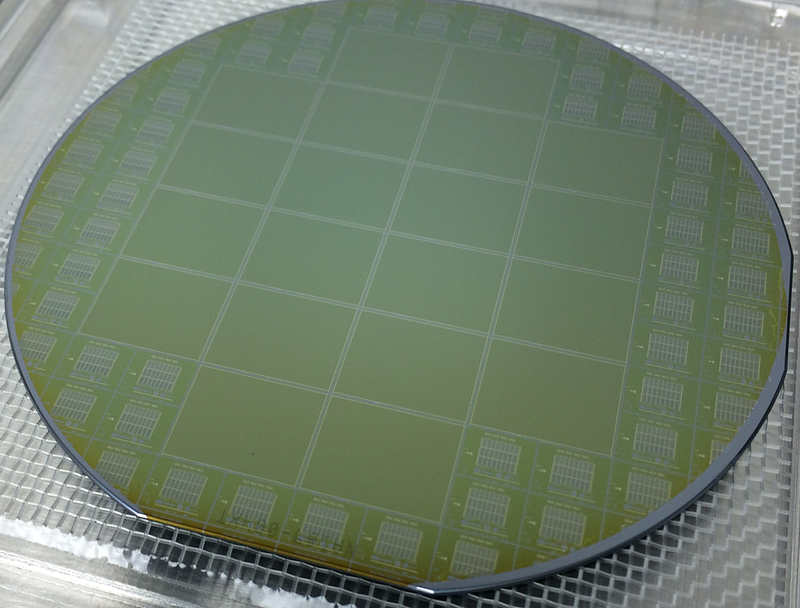
Martin Ettenberg: [00:02:49] The funny part is how I got into it. So, my PhD was in thermoelectric materials, which has almost zero to do with this. And the only reason was, I hated — there’s gonna be people that hate this statement — I hated academia. I was looking, actually, to sell my soul to Wall Street. And Greg Olsen at Sensors Unlimited, they were having problems with thermoelectric coolers that were used to stabilize the imagers at Sensors Unlimited. And he offered me a job for three months and said, if you like it, stay. And I stayed at Sensors Unlimited for 15 years. So, that’s how I got into it. And, yeah, back then there were 128 by 128 devices on 60-micron pitch. They barely worked. They they imaged. We were building some linear arrays and, and things have gotten better and better as the technology has evolved. The readouts have gotten much better. The detectors have gotten infinitely better from those days. We used to manufacture on 2-inch wafers. Now, standard manufacturing is on four. We’re looking at 6 inch now. So, big strides on that end. There’s even talk of 8 inch, but not there yet. And I just saw talk yesterday about people growing InGaAs on silicon on 8- and 12-inch wafers. So, people really driving it. You know, there’s the applications for lidar on automobiles. People are talking about AR, VR for headsets in the future. There’s a lot of various applications that are really coming, so . . .
Jimmy Carroll: [00:04:28] Yeah, and they become like SWIR technology in general, has become such an integral part of a lot of industrial applications from like in the warehouse for, you know, whatever fill level inspection or inspecting through packages or in food and bev, right? So, what are some of the, let’s say, emerging or increasingly popular industrial applications that you’ve encountered lately?
Martin Ettenberg: [00:04:51] Oh, my God. Usually, and I like to say is it’s, I shouldn’t say always, but a lot of them always involve water. Shortwave infrared is very good at detecting water. And so, you know, there’s a water absorption band somewhere at like 14, 20 or somewhere around there. And that water absorption band makes a huge difference. You can really detect water well. So, there’s all these, I’m going to say, water-based applications like you were talking about. Fill levels and detergent bottles — detergent is mostly water. Dryness of paper. You’re looking at fruits and vegetables and inspection of ripeness, basically looking at water content. And so, I’d say a lot of the applications are around water content. The other thing is just picking up things that are harder to detect with a visible camera. Like, our eyes are pretty good because we know what we’re looking for. But a visible camera may have trouble, like a foreign contaminant, like on a production line, like somebody’s blue glove got torn off, and it’s now in the pile of Skittles that are going down the line, right? And it’s tough to pick out that blue glove versus some blue Skittles or yellow Skittles with a visible camera, but with shortwave infrared, the glove is a different material, so you can use different, I hate to say colors, wavelengths of light. And then you can, you can pick out the glove from the Skittle, and now you can remove that foreign contaminant. And so, for lack of a better word, us consumers don’t open up our bag of Skittles and have a glove in it.
Jimmy Carroll: [00:06:33] Yeah, we spoke to somebody yesterday that was kind of talking a bit similar on these same concepts, right? And they were from the hyperspectral side. So, I’d like to ask this question, but from your perspective, what is the what is your definition, first of all, what is your definition of of SWIR right. Is it like 400 to 1700? And then what’s your short definition of, I’d say of, you know, multispectral versus hyperspectral?
Martin Ettenberg: [00:07:00] So, the SWIR question is always a great one. So, it depends who you talk to. Yeah. Because they all have their different . . . So, I always think of it as near-infrared . . . your eye ends at somewhere around 700, 750, depending how good your eyes are, some at 775, somewhere around that region. That’s the end of visible. And then up until where silicon dies, it’s somewhere around 1 micron, is near-infrared. Shortwave infrared also encompasses that. So, shortwave infrared covers that near-infrared band and goes all the way, technically, I like to say out to 2.6 microns, and that’s where there’s a water absorption hole, out at 2.6, and you really can’t see much on Earth until you hit 3.2, 3.3. That’s truly the SWIR band. Now, we’ve gotten sloppy because indium gallium arsenide covers up to 1.7, and so most people say 1.7 microns is SWIR, but it’s only a part of SWIR. Like, I like to think InGaAs is everything because I work in InGaAs. But it’s not the be-all end-all. So, I think SWIR out to 2.6. And usually people say it’s extended SWIR when you’re going out to 2.6 because InGaAs doesn’t cover it, and then down to 750. So, where your eyes don’t see basically. I apologize, I forgot the second part of the question.
Jimmy Carroll: [00:08:22] No, no. Good. It’s all good.
Martin Ettenberg: [00:08:24] I do remember you were talking about that, that’s the SWIR band.
John Lewis: [00:08:28] Well, yeah. And then I guess maybe leveraging off of Jimmy’s question, you know, you’re talking multispectral and hyperspectral where you have different technologies, you know like, and you’re doing just a snapshot . . .
Martin Ettenberg: [00:08:43] Well, yeah, so, we think of ourselves, we build broadband detectors. We cover the whole range, right? And whether you hook these up to spectrometers and do hyperspectral or multispectral, you know, I usually think of hyperspectral as when you’re covering multiple wavelength bands. So when you do like visible bands, SWIR or large parts of SWIR, and then multispectrals, a couple, you know, you pick one, two, three wavelengths in that band. I always like, I like hyperspectral systems for finding what you care about. Usually you can do your differentiation of what you’re looking for, usually with three to four wavelengths. Sometimes even two but usually three. These hyperspectral systems that you sell, they’re great if you don’t know exactly what you’re looking for or you’re constantly switching, like, if you’re flying over an area and you’re looking for copper or some kind of mineral, and you keep switching day to day what you’re looking for. A hyperspectral system’s great because you don’t know which wavelengths you care about that day. But if you’re on a factory line, you pretty much know after, you know, after you test what wavelengths you want, and then you pick those two or three wavelengths and put filters on your camera, and you go, and you don’t need to . . Because those hyperspectral systems, there’s a lot of data coming down the pipe that you now have to process. But if you’re only using two or three wavelengths, now you’ve reduced the processing power, and it’s a much simpler system, less to break, and everything else.
Jimmy Carroll: [00:10:19] Yeah, yeah, that makes sense.
Martin Ettenberg: [00:10:20] That’s how I look at it. Somebody may correct me.
Jimmy Carroll: [00:10:23] Spectral ROI.
Martin Ettenberg: [00:10:24] Yeah, yeah. You pick the important ones and it probably covers 90%, 95% of your problems, right?
Jimmy Carroll: [00:10:32] Let’s see, beyond, you know, the name of the podcast is “Manufacturing Matters.” So, that leads us to talk about a lot of industrial applications. But but it’s, you know, it’s not limited to that. Beyond the factory floor, let’s say, what are some applications where you’ve seen your customers using your technology?
Martin Ettenberg: [00:10:49] Ooh. Well, I do love the factory floor, so let’s not knock that one too badly. We have a lot of customers in various . . . so biological imaging, looking at various dyes that light up when they attach to cancer cells. So, these dyes literally attach to cancer cells, you can line them up with a laser. And then the doctor knows exactly where the cancer is to cut it out. And these are, these are emitting out in the shortwave infrared. And this is a new area. I love this area. We’ve always been involved in astronomy. Always a fun area to talk about. If you want to talk about other fun areas, art restoration is always great. You can see through paintings to charcoal under drawings. It’s been used for years. None of these are really big on the volume side at the moment. Like, you know, the biological stuff is emerging. Astronomers are always there. They’re always cool. They’re great. They’re, they’re great. You know, to look at and see.
Jimmy Carroll: [00:11:59] What about counterfeiting?
Martin Ettenberg: [00:12:01] You know, counterfeiting is a great one to talk about, except when you have Secret Service agents around. So, there are markers in the the dollar bills in U.S. as well as European currency. I haven’t looked at a ton of them, but currency does have a lot of these markers because they’re invisible to your eyes. They’re usually done in the near-infrared. So, you can use low-cost silicon cameras to pick them up. But shortwave can do it as well. I haven’t looked at the comparison, but yeah, we’ve always been pushing that kind of thing, mostly also on the industrial side for counterfeiting just to prevent part counterfeiting. So, you know, part counterfeiting, they’ll look at it and try to make an exact copy with their eyes. But if you put markers in there that are invisible to your eyes, then you can really mark your real parts and so forth and put IDs on them. I’ll admit it hasn’t caught on yet. Maybe it’s not a big enough problem yet, but.
Jimmy Carroll: [00:13:02] But it would work.
Martin Ettenberg: [00:13:03] But it would work, right.
Jimmy Carroll: [00:13:05] What about agriculture?
Martin Ettenberg: [00:13:09] I’m a big fan of agriculture. Agricultural sorting has always been . . . We talked about earlier about contaminants. Matter of fact, on our show floor, we actually show contaminants — rocks versus coffee beans because they’re both brown. Very hard for a visible camera to kind of tell the difference between browns. But in the shortwave infrared, coffee beans show up white and the rocks still stay dark. There’s lots of those little things of finding . . . We did one years ago with pitted peaches. A peach, as we said earlier, is filled with water. The pit is not. And so the reflectivity is very different. And so if you’re pitting a peach, if you cut through and miss and leave part of the pit in the peach, you can actually see it, alright? And there’s lots of these little agricultural problems. They also do, obviously, ripeness of fruit is very big. Years ago we used to be on airplanes and drones looking for marijuana grown illegally because you can tell the difference between plant types in the shortwave infrared. And so they’d fly over areas, and you’d be able to see who’s growing wheat, barley, forest, marijuana. I don’t think that’s not as important anymore.
Jimmy Carroll: [00:14:33] Yeah, I know it’s legal.
Martin Ettenberg: [00:14:33] Now, now it’s legal everywhere. But yeah, that’s one of the various agricultural things you can really pick up on. We’ve been talking to a couple people . . . we just spoke to somebody about soil dryness, as well, for planting of crops.
Jimmy Carroll: [00:14:57] Yeah, that makes sense. Optimizing fields and monitoring their health and . . .
Martin Ettenberg: [00:15:01] Monitoring and monitoring health is a big thing. And now that we’re seeing more robotic farming, like, literally tractors attract to GPS, right? You could you could image these fields, and you can figure out, you know, where do you need nitrates? Where are plants healthy? Where are they missing water? You know, you can almost, I don’t know if they can get down to the plant level, but they can get . . . with GPS and these tractors moving around, you just take the imagery, and you process all this data. Small drones now can carry these cameras. The cameras, you know, we were talking about earlier big deals. You know, the original 128 by 128 camera was, it was “this” big. Weighed about, you know, 4 or 5 pounds. The optics were huge and putting on a drone was just ridiculous, right? Now, the cameras are smaller, you know? We have a program to put our camera on the front of a 155 artillery shell for precision guidance, imaging and precision guidance, right? So, very small and compact cameras, right?

Jimmy Carroll: [00:16:09] Yeah, i never thought about it, but you can kind of automate the whole field, right? So you can use drones to monitor the fields and robots to to harvest it and then, you know, nonvisible imaging to separate whatever. We talked to somebody yesterday who said you can, you know, separate the golf balls from the potatoes. You can kind of automate the whole process.
Martin Ettenberg: [00:16:25] You can automate the whole process.And you can check for ripeness, you know, is that is that fruit ready to be picked? You know, because you can literally detect how much water is in it, sugar and glucose. You can, you can do all these detections by looking outside the band. You know now that that fruit’s ready. Let’s let’s pick it now. And the robot can do it. better than we can.
John Lewis: [00:16:54] Any any predictions about the future of SWIR?
Martin Ettenberg: [00:16:57] Oh, yeah. I, you know, I’ll admit when I’m wrong, So, yeah, I’ve been wrong before on some things, you know, I never know on some of these things that come out. Wow, what am I going to say? So, I think shortwave is really driving down in price. I think if a big application comes along, we’re going to see really inexpensive shortwave infrared. Somebody’s got to do the pull. If somebody decides to pull, like, cell phones or automotive or something else, you will really see another order of magnitude or two of a price drop in shortwave infrared. It’s got to be the pull. At Sensors Unlimited years ago, I’ll give them some credit. When I was there, we were selling linear arrays for the — linear arrays — they weren’t for anything at the moment. They were 256 elements long. They had a 1% dropout spec, so you can have like two pixels that were bad, and they were selling for about seven, eight thousand dollars a piece. And Lucent came along. They bought one, they bought three, they bought five, 10, 20. And it was, I love this story, and they came to us one day and they said, all right, we need a thousand a month. They need to be perfect arrays. There can’t be this 2% dropout because we’re going to put them in WDM, wavelength division multiplexing, and we’re going to monitor the lasers on the fiber optic network.
Martin Ettenberg: [00:18:29] We need a thousand a month, and they’ve got to be under $1,000. And we’re like, oh my God. And our boss, Greg Olsen at the time, was like, all right, we’re going to do it. And everybody was sitting in the meeting, the whole company, and we’re like, how are we going to do this? But we did it. And within six months we were up to over a thousand. We were selling them for under $1,000 a piece, and we were making tons of money and everything was great. And price dropped, basically an order of magnitude. And that was because there was great pull. You know, LED lighting is a perfect example, right? Just five years ago, you paid like 30, 40 dollars a light bulb. A couple of years before that, it was $100 a light bulb, right. And now, what are they, a buck fifty, maybe? It’s the same thing. This is a semiconductor material. You get pull and desire, the prices are going to drop. And so my prediction is that something’s going to, something’s going to pull it. As much as I love industrial, industrial is, they’re big numbers but they’re not huge, overwhelming, right? You need, you need a killer consumer app. Or it could be a killer military app. Like, you know, now we could buy microbolometers now in Home Depot, you can hook up to your phone and walk around your house and do a thermal inspection.
Martin Ettenberg: [00:19:53] You know, I remember sitting in DARPA. At the beginning of my career, my first meeting was at DARPA, where they were showing the first microbolometers working, and they were like, they were what, 128 by 120 on 60 micron pitch? And they, they worked. Not great, but they worked, right? And then the military said, we really need them. We want to put them on every rifle sight, and it really drove down the cost, right?. And now, as consumers, we have low cost, , microbolometers, we have low cost GPS, right? We can have low cost. SWIR doesn’t have to be low cost. Everybody talks about, oh, it’s a III-V material. You know it’s expensive. It’s only on 4-inch wafers. And I’m like, yeah, because nobody said, you know, the killer app is . . . And you start pulling on the big numbers, and we can get to 6- or 8-inch wafers. You know, people know how to do wafer processing. Wafer scale hybridization we’re working on. There’s all these pieces that will make it low cost. And I think within the next, I’m going to say five or 10 years, we’re going to see there is going to be some kind of killer app, whatever it is, I don’t know. You know, cell phone, AR, VR, automotive lidar. Could be your cell phone. I don’t, you know, I don’t know what. That, I don’t know, somebody’s going to say this really works great for . . . And then I think that’s going to make it. And we won’t be talking about a $20,000 camera anymore. We’ll be talking about a, probably not a $20 camera, but, you know, like a 50,100 dollar camera.
Jimmy Carroll: [00:21:30] Yeah, that’s a good one. Martin, if people want to learn more about Princeton Infrared Technologies. Is that PrincetonInfrared.com?
Martin Ettenberg: [00:21:37] Is it Princeton Infrared? PrincetonInfrared.com. You know, Photonics West. If you’re here, I’m happy to talk to you then. You can always send me an email at Martin@PrincetonInfrared.com. I’m always happy to talk about shortwave infrared. As you can see, I get all excited about whenever we, whenever it comes up. So, yeah, I’m happy to talk about technology. But thank you. This has been great.
John Lewis: [00:22:03] It’s been a pleasure.
Jimmy Carroll: [00:22:04] Yeah. Thanks so much for taking the time. And yeah, if anyone, obviously Martin gave his email, but if anybody has any questions or comments we’d be happy to pass those along. Or if you have questions or comments for us, it’s on Manufacturing-Matters.com. And thanks so much for watching or listening.